Learning to Pace Yourself

Life is not under your control, but the rhythm of life is.” Yogi Bhajan

Every morning, though fatigued, you get up and attempt a “normal” schedule. Much of your responsibilities relate to other people-children, spouse, coworkers, friends, elderly parents.

Even though you are depressed, you keep it to yourself so others don’t realize how scared, angry, or sad you are.

You are in pain, but when someone asks how you are doing, you momentarily forget and say “doing well!” Your “doing well” might be a crisis for someone who hasn’t been in the treatment or recovery frying pan.

When I began teaching yoga to cancer survivors 7 years ago, I noticed how deeply the ladies would relax during sivasana (the rest at the end of class). Having discharged tension and expanded their breathing, bodies and minds would melt into a feeling of safety and comfort.

I was surprised, however, and a little worried, when I saw them spring up and immediately drag themselves to a seated position as soon as they heard my voice begin to gently wake them from sivasana.

These ladies moved from 0-100 in a flash, their nervous systems activated as they complied with what they thought I expected which was contrary to the rest and slowness their bodies needed.

To help them slow down their return in future classes, I began to say: “Continuing to relax, bring your awareness back to your breathing,” so that they wouldn’t injure themselves jolting upright.

They needed explicit permission to listen to their bodies and go at their own pace.

Most of the people in my Yoga and Talk® Therapy Groups and classes have been very productive members of society. Health conscious, achievers, they have met the challenge of cancer head on with an inspiring will to overcome. They manage the side effects of treatment alone and often blame themselves for not feeling better quicker, not being more “productive” quicker, even while battling fatigue, pain, grief, lack of sleep, anxiety and depression.

One gift I enjoy offering is a safe place to experiment with going at the pace and rhythm that your body truly desires. They have at least one hour a week where there is NO GOLD STAR for pushing past your own limits and your natural resistance. We practice honoring the resistance from our bodies and breathing in to it.

I encourage students to value rest as much as exerting themselves in an exercise or posture and to “go at a pace that is so in tune with your body that it feels pleasurable.”

This experience of tuning in to your body during class can become a building block to use in other areas of life.  Just like in class, in regular life you can give yourself permission to come to a neutral resting position for a few moments. You can sit or lie down, even if others are dancing around or kicking their legs, or running around busy and “productive.”

Just like in class, the most advanced practice is to go at your own pace and listen to your own body as it heals and rests.

It’s advanced because it’s a challenge on many levels. It requires noticing when you are pushing yourself, complying with the expectations of others, or competing with your neighbor. Once you begin to notice the pushing and the resistance, you can find your own pace.
 

Being the Observer

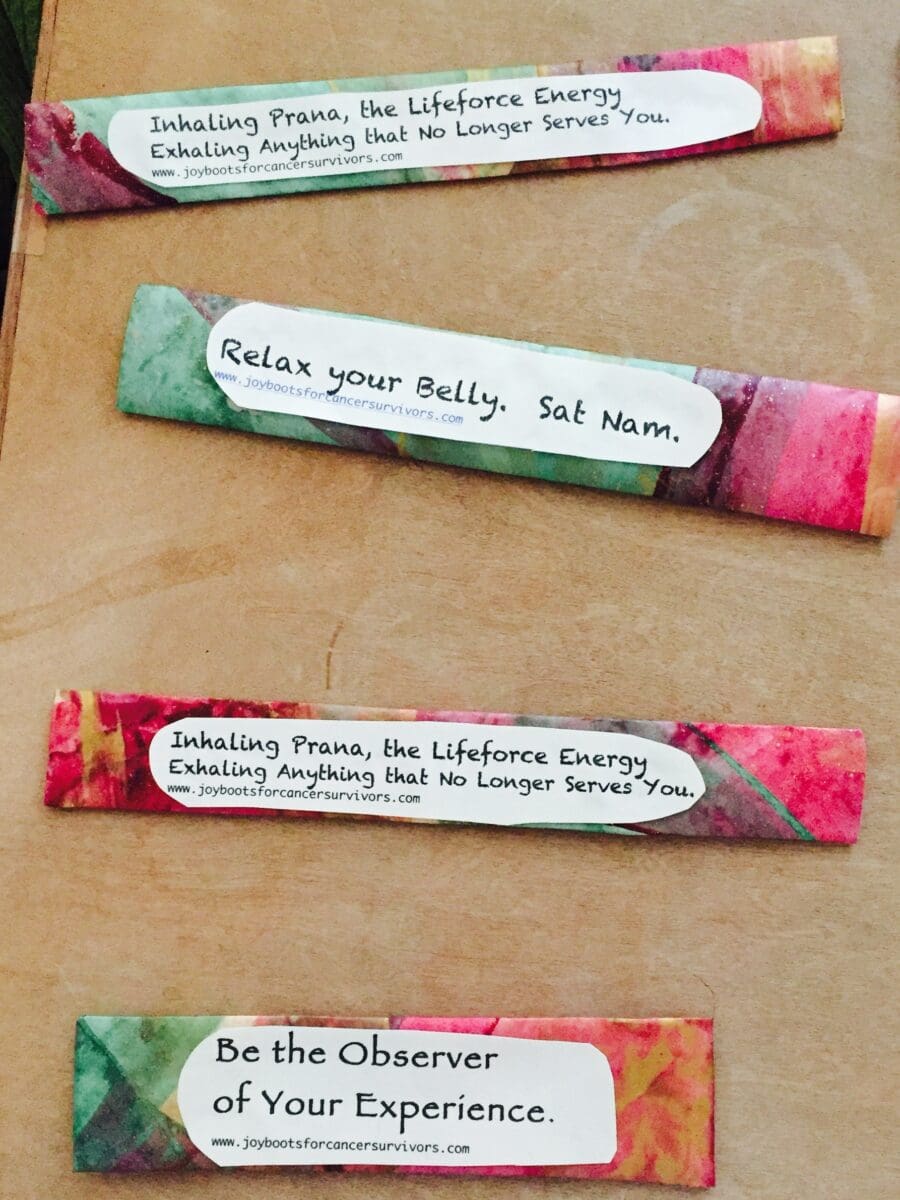
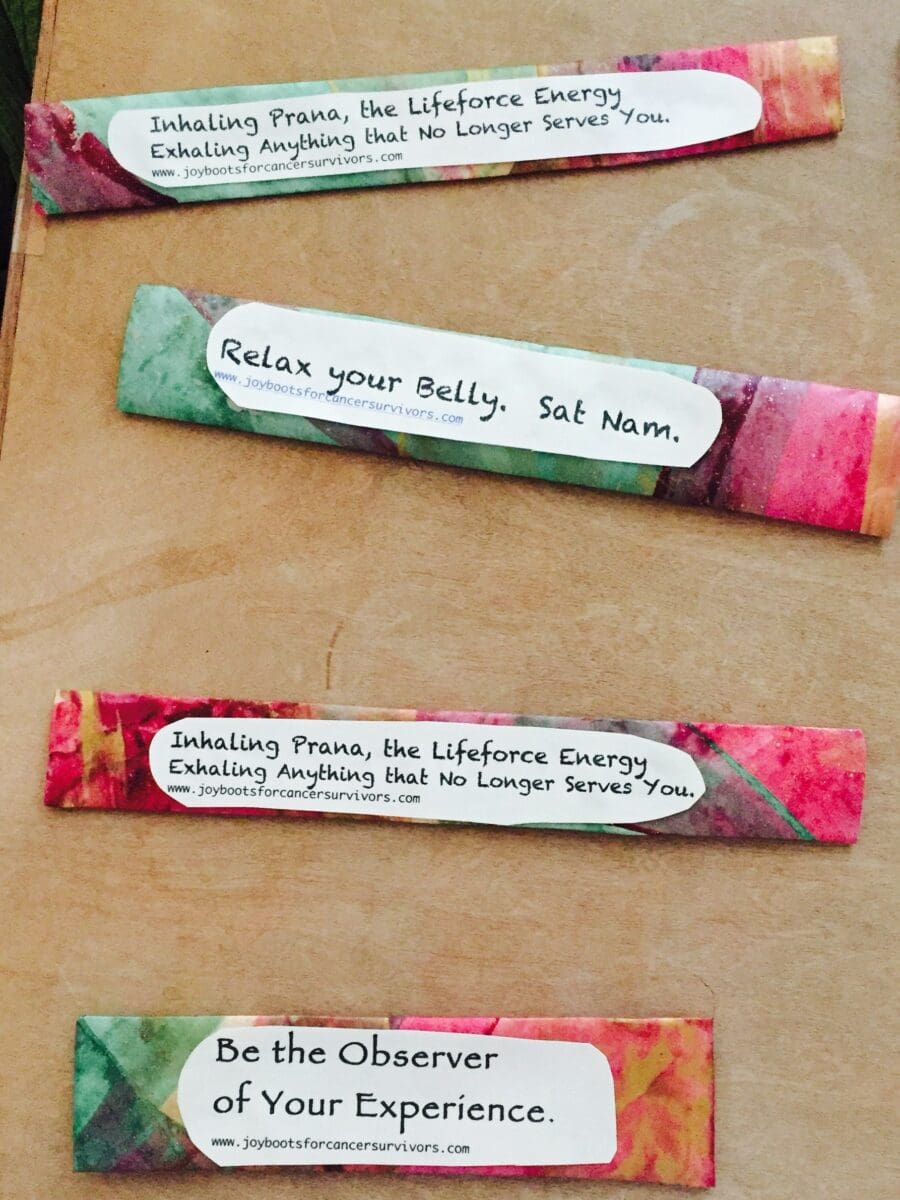
Practice being the Observer of your experience. By learning to take a step back and observe what you are thinking and feeling (instead of just reacting to it), over time you can develop greater ability to tolerate discomfort, pain and challenges of the cancer experience. You will also be more aware and appreciative of the positive parts in the present moment.

Yoga for Lymphedema of the Arm

Cancer survivor yoga practice. This video is exercise #4 from Kriya for Immune Fitness. It’s also a practice recommended for managing lymphedema of the arm. The clap connects both sides of the body and the hemispheres of the brain, which has an emotionally integrating effect.

Feeling Your Own Sacredness- March Workshop

Sign Up Now for the March 26, 2017 afternoon workshop at YogaYoga Westgate. 2-4:30pm  $30

Practice yoga and meditation specially chosen for cancer survivors and experience your own sacredness, relaxation and joy.  Connect deeply within yourself and with people who truly understand your experiences.

To register:http://www.yogayoga.com/calendar/details?event_id=30429302


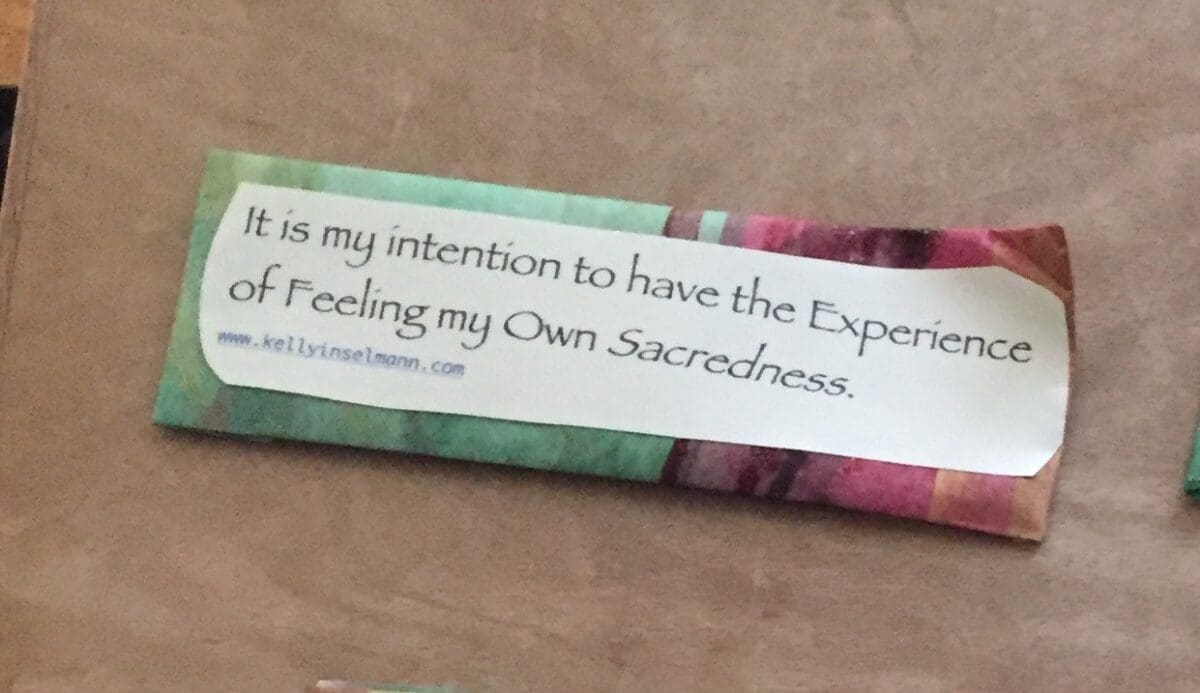
Sacredness as Intention


Spinal Flex with Suspended Breath for Energy

Spinal Flex with Suspended Breath for Energy is the third exercise in the Kriya for Immune Fitness (#3) from Dying into Life.

Inhale through the nose, suspend the breath in.  Press the tongue to the roof of your mouth as you suspend the breath, then begin the spinal flex.  Flex until you can no longer COMFORTABLY hold your breath, then come back to center and exhale through the nose.

Continue at your own pace.  If the flex feels too intense for you today, you could simply practice the breath exercise.


Stress Relief through Long Deep Breathing

Long deep breathing stimulates the relaxation response. It’s simple, but not always easy to remember!

Practice long deep breathing with Kelly this week, using a special mudra (yogic hand position) to increase relief from stress. Women place right middle finger and thumb together, left pinky and thumb together. For men, it’s reversed.

Bring your attention completely to your breath to give your mind a rest from worry.

Detoxifying Breath with Spinal Flex (Immune Fitness #2)

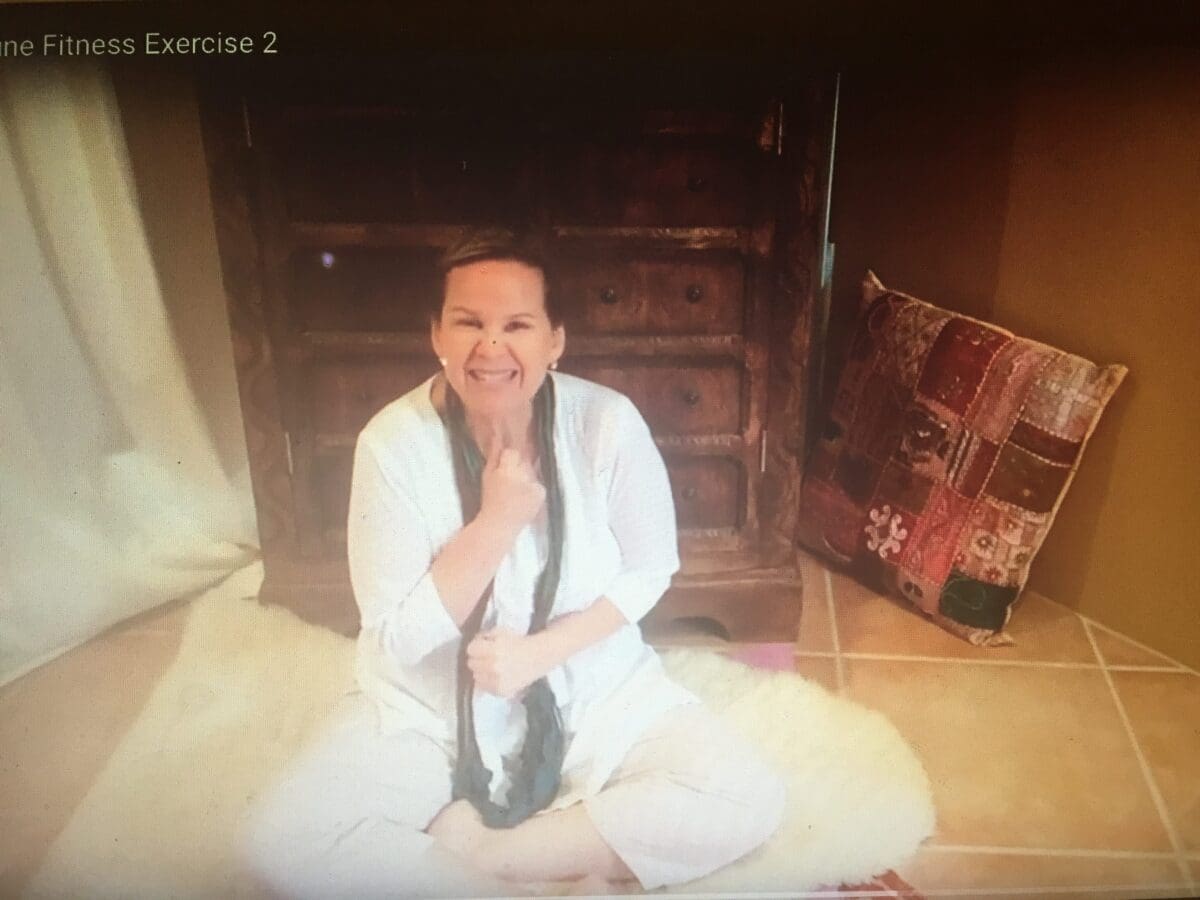
Practice spinal flex with a special variation to discharge anger, stress, fear, trauma, disappointment, negative predictions and anything that no longer serves you.  Exercise #2 from Kriya for Immune Fitness.

Inhale flexing forward, then make the sound “HUNH” from the belly as you exhale, stick your tongue out, and round the spine.  You can practice this seated on the floor or in a chair with the hands on the thighs.

Take this opportunity to really let go!  Don’t worry about imagining what you are letting go, just trust that your body knows and will release it.

.

6 Ways to Calm Yourself When Cancer Scares You

A lingering cough that won’t go away finally made Roxanne call her oncologist.

Leaning on the kitchen counter with the plates and forks from breakfast piled beside the sink, she hears the nurse say: “With your history, we need to have you come in and check it out.”  Her heart rate quickens and her mind goes blank. Then it dips into the worst possibilities. The shock and fear she felt when first diagnosed three years ago returns full force.

It’s not much fun to talk about the terror of cancer. Many survivors experience fear and terror over and over again, beginning with when they are first diagnosed.

For the past 7 years, I’ve taught a weekly yoga class for cancer survivors. Checking in before we start, people share what motivated them to come. Often it is hope of relief, the sense of wellbeing when we finish, learning to meditate, connecting with their tribe. It’s also “letting go of fearful thoughts,” a scan in the afternoon,” stress, or a “cancerversary” date approaching.

Over the next 2 days, Roxanne’s breath is shallow, hard to catch and control.  Her mind won’t be still and she loses focus.  She tries to go shopping with her mother and teenage daughter for a dress to wear to a wedding but feels impatient and grumpy.  She avoids talking about her fear and anxiety because she thinks it will alarm them. After all, she doesn’t know anything yet.

Protecting others from pain and worry, Roxanne shoulders it alone. Inside she obsesses: Will her life and goals be hijacked by new medical interventions? Will she lose the energy she’s finally recovered? How will her daughter, Lily, react when she finds out?

She knows it might be nothing.  And worse case scenario, a recurrence is not a death sentence.  But she no longer has the illusion that it can’t happen to her.

She cries in the shower where no one can see. She reads a new mystery by her favorite author. Enjoying ice cream, she lies in bed and watches Netflix. An Ativan stops the agony of rumination so she can sleep at night. She has trouble getting out of bed in the morning.

Neuroscience teaches that under (real or perceived) threat of danger, your body goes into fight, flight, or freeze in order to survive.

The fear response Roxanne had is faster than lightning and outside her control. 

Once you are aware of how your nervous system has reacted, here are some ways to soothe and care for yourself:

  1. First recognize that fight/flight or freeze is a normal biological reaction. It is a perfectly understandable and adaptive initial phase of coping. Be as kind and compassionate to yourself as possible. Give yourself credit for making it through each day. You are doing the best you can!
  1. Reach out. When you feel the fear taking over again and your breath getting shallow, call a friend who can handle it, talk to trusted family, or a therapist or support group. Let yourself cry. Let someone comfort and connect with you.
  1. Find ways to feel connected to your body. Run, walk, swim, put on music and dance, do yoga. Feel and move your body. Enjoy your circulation, your ability to stretch and your physical sensations. Even a few minutes of one of these activities can make a huge difference.
  1. Sense your belonging to the earth. Feel the safety of gravity keeping you attached to the floor or ground. Feel the parts of your body that are touching the ground, the soil, natural bodies of water, your chair or the floor.
  1. Observe your breathing without judging it. Enjoy the pulse of life within you as you expand and contract in each moment and with each breath.
  1. Write about your feelings. Express all of it in a journal, telling your unvarnished and uncensored truth.


Spinal Flex for Energy (Immune Fitness #1)

Exercise #1 in Kriya for Immune Fitness.  Spinal Flex helps cancer survivors rebuild energy and mental focus.  It warms up the lower back and benefits the immune and lymphatic systems.  It can be used as a daily warm up to stay flexible.

Please modify by going at your own speed, linking the breath to the movement by inhaling as you flex forward, exhaling as you round to the back.  Feel free to sit in a chair with the hands on the thighs to do this exercise.